

Hey there! I'm a supplier of Strand Pelletizing Machines, and today I'm gonna break down how these nifty machines work. So, let's dive right in!
The Basics of a Strand Pelletizing Machine
A strand pelletizing machine is a key player in the plastic processing industry. It's used to convert plastic materials into small, uniform pellets, which are then used in a wide range of applications, from making plastic products to recycling.
The process starts with the plastic material. This can be in the form of granules, flakes, or even recycled plastic. The material is fed into the machine, where it goes through a series of steps to become those tiny pellets we're after.
Step 1: Extrusion
The first step in the process is extrusion. The plastic material is fed into an extruder, which is like a big, powerful tube. Inside the extruder, there's a screw that rotates, pushing the plastic forward. As the plastic moves through the extruder, it's heated up to a molten state. This is where the magic happens!
The heat and pressure in the extruder help to melt the plastic and make it flow. The molten plastic then passes through a die, which is a specially designed plate with small holes. As the plastic comes out of the holes in the die, it forms long, thin strands.
Step 2: Cooling
Once the strands are formed, they need to be cooled down. This is usually done by passing the strands through a water bath. The water helps to quickly cool the plastic, making it solidify. The length of the water bath and the speed at which the strands pass through it are carefully controlled to ensure that the strands are cooled evenly and at the right rate.
Step 3: Pelletizing
After the strands are cooled, they're ready to be cut into pellets. This is where the pelletizing part of the machine comes in. The cooled strands are fed into a cutting unit, which has a set of rotating blades. The blades cut the strands into small, uniform pellets.
The size of the pellets can be adjusted by changing the speed of the cutting blades and the speed at which the strands are fed into the cutting unit. This allows for a high degree of flexibility in the pelletizing process, so you can produce pellets of different sizes depending on your needs.
Step 4: Drying
Once the pellets are cut, they still have some moisture on them from the water bath. To remove this moisture, the pellets are usually passed through a dryer. The dryer uses hot air to evaporate the water, leaving behind dry, ready-to-use pellets.
Advantages of Strand Pelletizing Machines
There are several advantages to using a strand pelletizing machine. First of all, it's a very efficient way to produce plastic pellets. The process is relatively simple and can be automated, which means you can produce a large quantity of pellets in a short amount of time.

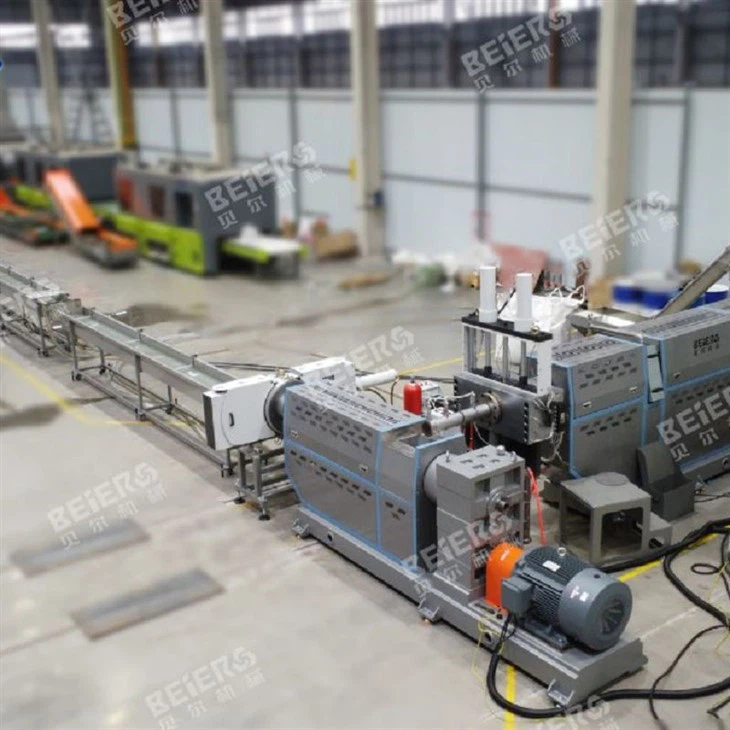
Another advantage is that strand pelletizing machines can handle a wide range of plastic materials. Whether you're working with virgin plastic, recycled plastic, or a combination of both, a strand pelletizing machine can get the job done.
Finally, the pellets produced by a strand pelletizing machine are of high quality. They're uniform in size and shape, which makes them ideal for use in a variety of applications.
Other Types of Pelletizing Machines
While strand pelletizing machines are very popular, there are other types of pelletizing machines available as well. For example, the Water-Ring Die-Face Pelletizing Machine is another option. This type of machine uses a water ring to cool the pellets as they're cut, which can result in a more consistent pellet size.
The Parallel Twin Srcew Extruder Granulator is also a popular choice. This machine uses two parallel screws to extrude the plastic, which can provide more efficient mixing and better control over the extrusion process.
And if you're working with plastic flakes, the Plastic Flake Pelletizing Machine might be the right option for you. This machine is specifically designed to handle plastic flakes and can convert them into high-quality pellets.
Why Choose Our Strand Pelletizing Machines
As a supplier of strand pelletizing machines, we take pride in offering high-quality products that are reliable and efficient. Our machines are designed to meet the needs of a wide range of customers, from small businesses to large industrial operations.
We also offer excellent customer service. Our team of experts is always available to answer your questions and provide support. Whether you need help with installation, maintenance, or troubleshooting, we're here to help.
If you're in the market for a strand pelletizing machine, or if you have any questions about our products, don't hesitate to get in touch. We'd love to discuss your needs and find the right solution for you. Contact us today to start the conversation!
References
- Plastic Pelletizing Handbook, Second Edition. Edited by John H. A. Dumont.
- Extrusion of Polymers: Theory and Practice. By Martin J. C. Cakmak.