

Jiangsu Beier Machinery is an integrated equipment supplier that accelerates plastic extrusion to recycling technology towards green recycling. As a company who is committed to sustainability, Jiangsu Beier Machinery integrates the three business units of plastic extrusion, compounding, and recycling systems to provide the global market with a substantial solution that balances the quality of life with the sustainability of the earth.
Why Choose Us
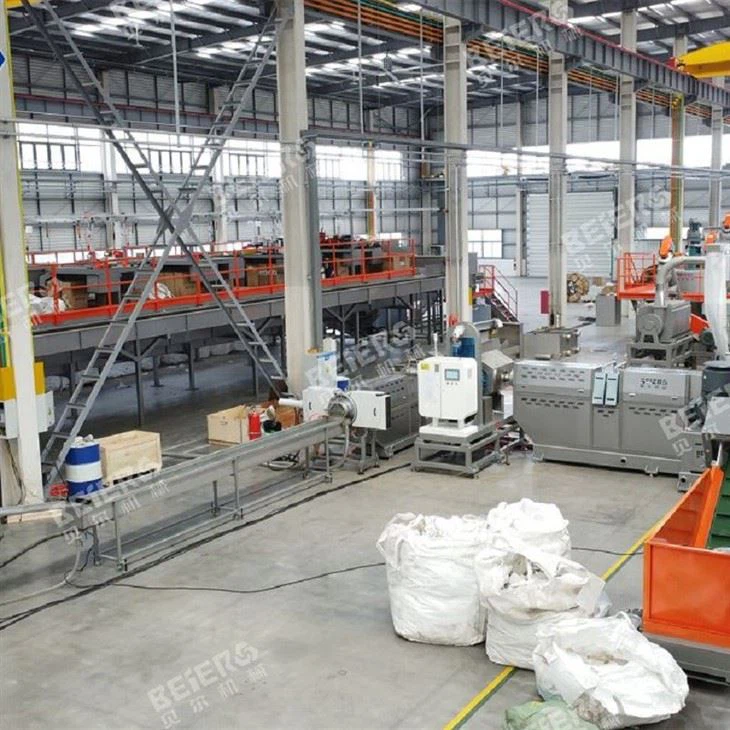
Our Factory
As a company who is committed to sustainability, jiangsu beier machinery integrates the three business units of plastic extrusion, compounding, and recycling systems to provide the global market with a substantial solution that balances the quality of life with the sustainability of the earth.
Our Service
Our mission is to provide leading solutions to our customers with our sincere attitude, both in terms of performance and energy efficiency. Our vision is achieve the goal of top global plastic machinery system manufacturer. We aspire the best combination of theoretical research, practical applications and mass production, in order to explore a sustainable development path toward success.
Our Product And Application
Pe pipe extrusion machine is now in widespread use in many industries particularly industrial piping systems, including underground gas and water pipelines, where it is the dominant material.Pet bottle washing line,pp/pe hard material washing line,pp/pe soft material washing line,agriculture film washing line.
Our Team
Thanks to the best technical team, it's possible to address most technical concerns with a quick phone call to our friendly service team. You can trust beier's excellent support team's comprehensive understanding of your specific machine's hydraulics, mechanics and software specifications.
-
![Plastic Flake Pelletizing Machine]()
-
![Plastic Film Pelletizer Machine]() Plastic Film Pelletizer MachineThese waste PE PP film granulation lines are ideal for recycling and pelletizing materials such as PE and PP films, woven bags, and non-woven fabrics.read more
Plastic Film Pelletizer MachineThese waste PE PP film granulation lines are ideal for recycling and pelletizing materials such as PE and PP films, woven bags, and non-woven fabrics.read more -
![Agglomeration Pelletizing Machine]() Agglomeration Pelletizing MachineRecycling Capabilities: The system is designed for recycling PE and PP films, woven bags, and non-woven fabrics.read more
Agglomeration Pelletizing MachineRecycling Capabilities: The system is designed for recycling PE and PP films, woven bags, and non-woven fabrics.read more -
![Strand Pelletizing Machine]() Strand Pelletizing MachineMaterials: Designed for reinforcing various polymers with fibers such as glass and carbon fiber. Compatible with materials like PP, PA, PBT, ABS, AS, PC, POM, PPS, and PET.read more
Strand Pelletizing MachineMaterials: Designed for reinforcing various polymers with fibers such as glass and carbon fiber. Compatible with materials like PP, PA, PBT, ABS, AS, PC, POM, PPS, and PET.read more -
![Water-Ring Die-Face Pelletizing Machine]() Water-Ring Die-Face Pelletizing MachineReinforcement Modification: Suitable for PE, EVA, and other materials enhanced with additives like CaCO₃, Talc, TiO₂, and Carbon Black.read more
Water-Ring Die-Face Pelletizing MachineReinforcement Modification: Suitable for PE, EVA, and other materials enhanced with additives like CaCO₃, Talc, TiO₂, and Carbon Black.read more -
![Two Stage Plastic Film Granulating Machine]() Two Stage Plastic Film Granulating MachineDurable Construction: The screw and barrel are specially designed by BEIER, with the inlet mouth treated using a special alloy, ensuring exceptional strength and longevity.read more
Two Stage Plastic Film Granulating MachineDurable Construction: The screw and barrel are specially designed by BEIER, with the inlet mouth treated using a special alloy, ensuring exceptional strength and longevity.read more -
![Parallel Twin Srcew Extruder Granulator]() Parallel Twin Srcew Extruder GranulatorThe co-rotating parallel twin screw extruders are specifically designed for applications where thorough mixing of materials is crucial.read more
Parallel Twin Srcew Extruder GranulatorThe co-rotating parallel twin screw extruders are specifically designed for applications where thorough mixing of materials is crucial.read more -
![Air-cooling Die-face PelletizingMachine]() Air-cooling Die-face PelletizingMachineDegradable Masterbatch: Suitable for creating degradable masterbatches using PE and PS combined with starch and other additives.read more
Air-cooling Die-face PelletizingMachineDegradable Masterbatch: Suitable for creating degradable masterbatches using PE and PS combined with starch and other additives.read more -
![Under-water Pelletizing Machine]() Under-water Pelletizing MachineThe underwater pelletizing system for plastics offers superior mixing capabilities, outstanding self-cleaning properties, and a flexible modular design, making it ideal for processing a wide varietyread more
Under-water Pelletizing MachineThe underwater pelletizing system for plastics offers superior mixing capabilities, outstanding self-cleaning properties, and a flexible modular design, making it ideal for processing a wide varietyread more


Plastic Pelletizing Line Solution
A plastic film pelletizer machine is a piece of equipment used to convert plastic waste into small, uniform pellets that can be used in the manufacturing of new plastic products. The machine is designed to process plastic waste by cutting it into small pieces, which are then melted and formed into the desired shape and size. Once the plastic has been melted and formed, it is solidified and cut into small pellets for use in the production of new products. Pelletizing machines are commonly used in the plastic recycling industry to help reduce waste and improve sustainability, as well as lower production costs and improve efficiency for manufacturers.
Advantages of Plastic Film Pelletizer Machine
Reduced Waste. The reduction in waste is one of the main advantages of employing a plastic film pelletizer machine. The device enables businesses to turn used plastic film waste into pellets that can be used again rather than thrown it away. This saves on disposal costs while also reducing the amount of waste transported to landfills.
More Effectiveness. Efficiency in the production process is also increased by using a pp pe film pelletizer machine. Plastic pellet producers can save time and money by minimizing the demand for fresh raw materials by turning plastic waste into useful pellets. As a result, productivity rises and the production process becomes more efficient.
Enhanced Sustainability. It is crucial for firms to implement sustainable practices as people become more ecologically aware. By lowering waste and conserving resources, using a pp pelletizer machine promotes sustainability. This not only helps the environment but also boosts a business’s standing among customers.
Working Principle of Plastic Film Pelletizer Machine
The plastic film pelletizer machine of the plastic granulator is an extruder system, which is composed of a transmission system, a heating and cooling system, and an extrusion system.
The transmission system
The function of the transmission system is to drive the screw. The torque and speed required for the screw supply during the extrusion process are generally composed of a motor, a reducer and a bearing.
Heating and cooling device
The necessary conditions to ensure that the pelletizer can perform during plastic extrusion are heating and cooling. The control system of the plastic granulator includes a heating system, a cooling system, and a process parameter measurement system, which are mainly composed of electrical appliances, meters and actuators.
The main function of the device is to control and adjust the drag motor of the main and auxiliary machines, output the speed and power in accordance with the process requirements, and make the main and auxiliary machines work in coordination; detect and adjust the temperature, pressure and flow of the plastic in the extruder ; to achieve the control or automatic control of the entire unit.
The extrusion system
The extrusion system includes a screw, a barrel, a hopper, a head, and a mold. The plastic is plasticized into a uniform melt through the extrusion system, and a continuous extrusion die is formed under the pressure in the process.
Understanding the selection process of plastic film pelletizing machines is the first step: To know the plastic material types you intend to recycle, calculate the output requirement, select the machine requirement including cutting and feeding types, and then select the options to the equipment.
The following is the list showing 6 factors to consider when selecting plastic film pelletizing machines.
Compact Design
It can definitely save some space and also fit right next to your production lines, such as film or bag-making machines.
Easy Installation
This install option is intended to help you recycle films or bags in no time, without any additional configuration.
Effective Cost
Compared with recycling pelletizing machines of the same size, the costs of machines from asia are much more competitive.
Energy saving
Using less energy via energy efficiency technology is a simple way to reduce energy consumption and save production costs.
Durability key components
Extruder screws and barrels are the key components for plastic film pelletizing machines. High-quality and perfect match screws and barrels are needed to be guaranteed and the best fit for recycling pelletizers.
Fast after-service
Inventory of spare parts is the last but the most important consideration that you have to pay extra attention. Some machine manufacturers do not manage spare parts, so it takes a few months if you need maintenance. Therefore, having a manufacturer with better spares management will help you get a quick repair and reduce downtime.
Adjust the proper distance between the granulator and the screen of the plastic film pelletizer machine. Generally, the closer the better, the better the normal operation will not touch the granule.
Let the plastic film pelletizer machine run normally for a few minutes, is it working properly? Start slowly feeding, note: There should be no hard materials in the added materials, especially hard materials. Adjust the appropriate speed according to the viscosity of the material. If the viscosity is high, turn the speed down, try not to shake the sieve in the process.
If the mesh does not discharge during work, the mesh of the screen may have been blocked. Remove the screen and clean it. If it is not working after a certain period of time, wait for the next work. The screen is cleaned before it can work, so that the powder is not blocked in the mesh, so it is easy to squeeze the screen.
Air-cooling and water-cooling are turned on according to the material characteristics. If it is sensitive to heat, the component will be slightly larger, and the heat-insensitive opening will not open.
The plastic film pelletizer machine should be completely maintained for 3 months, and the oil of the reducer should be replaced and replaced with new mechanical oil.
After each work, thoroughly clean the plastic film pelletizer machine granules and granules, and dry them with a dry cloth.
When the plastic film pelletizer machine is working or cleaning, the material cannot be dropped into the inverter panel, which makes it easy to damage the inverter panel. Slow speed regulation when speed regulation.
Under-water Pelletizing Machine are a type of pelletizing equipment that utilize an underwater cutting system to produce high-quality pellets. The process involves forcing molten or semi-molten plastic through a die plate into a water chamber, where it is cooled and cut into uniform pellets.The underwater pelletizing process offers several advantages over other pelletizing methods. For example, it allows for the production of pellets with a uniform size and shape, which is important for achieving consistent product quality. Additionally, the process can be used to produce pellets from a wide range of materials, including those that are difficult to pelletize using other methods.

Components of Under-water Pelletizing Machine
Pelletizer is the core part of underwater cutting, including main components such as motor, transmission box, pelletizing device, etc. There are two kinds of devices for pelletizing: Manual and pneumatic. The motor is siemens motor, spring damping device, and the mobile platform can move back and forth on the track, which is convenient for operation and maintenance.
Special wear-resistant alloy materials, advanced manufacturing technology, electromagnetic induction heating and anti-wear technology can better ensure the economy of customers in excellent processing.
The process is realized through plc, and the touch screen displays the operation interface, which is simple and convenient to operate. The application of program control technology reduces the process intensity in the production process.
Electromagnetic induction heating ring, through electromagnetic induction balanced heating, changes the traditional heating method of heating rod, so that the cut particles are more smooth and beautiful.
Special knife design, knife adjustment is convenient and quick.
The impact of the cutting blade cutting blade in the application process will occur wear, when the blade wear to a certain extent, cutting pellets will take some burrs, these burrs adsorbed water in the subsequent drying process is difficult to remove, resulting in high water content.
The influence of the filter when the material comes out from the mold, the instant pressure release swells up, and the water is easily wrapped in the material and vaporized to form a hole, and the water contained in the material cannot be discharged through subsequent drying. 3. The mold pressure is too small too small mold pressure makes the material extruded from the mold less dense, and the water infiltrates into the granule during the granule transfer process, and the infiltrated water is difficult to be taken out in the dewatering process.
Mismatch of dewatering machine / spin dryer the mismatched dewatering machine will easily cause the dewatering distance to be too short and the pellet climbing distance to be shortened during the dewatering process, so that the water cannot be removed smoothly.
Low water tank temperature as we all know, the efficiency of hot water dewatering is relatively higher than that of cold water, and even if we use the cold strand cutting method, the most effective way to dewater is to blow hot air. That is why the water content of the pellets is high when the machine is just turned on, because when the machine is turned on, the water in the tank enters the circulation system is too low, the temperature has to be reduced, and then the heat brought out from the pelletizer by the pellets to raise the temperature.
Will someone say: You can first raise the temperature of the water tank, so that the problem will be solved. To be honest, the water tank is slow to heat up, and even slower to cool down, I have tried, our pelletizer water tank to reduce the temperature of 1 ℃ takes about 7 minutes or so. Of course, by feeding cold water into the tank to cool down fast, but sometimes it is impossible to feed cold water. The tank water temperature is too low not only affects the dewatering efficiency in the dewatering machine, and because the water temperature is too low, it will affect the mold temperature, which brings the result that the head pressure is too high.
Water tank temperature is too high the water tank temperature too low is not good, then the water tank temperature high is good? Real practice has proved that the water tank temperature too high is not good, too high-water tank temperature let the particle cooling speed lower, easy to form craters on the surface of the pellets, at the same time, too high water temperature will bring the expansion of the pellets, with the gradual cooling of the pellet contraction, the water remains in the material.
The water in the tank is not enough too little water tank water, easy to lead to slow down the water circulation process, pellets in the water soaking time is extended, inevitably have water infiltration, resulting in high water content of granules.
Unstable feeding the unstable feeding will easily cause the difference of cutting sizes in big range, and the big size difference will cause the big pellets to have more water on the surface.
Maintaining High Throughput Rates with Underwater Pelletizing Systems
Underwater pelletizing systems are renowned for their ability to deliver high throughput rates, a feature that is essential for industries requiring large-scale production. However, to maintain these high throughput rates, several factors need to be considered.
System Calibration: Regular calibration of the pelletizer and ancillary equipment is crucial. This ensures that the machinery operates within its optimal parameters, preventing slowdowns and breakdowns that could otherwise hamper productivity.
Pellet Quality Monitoring: Constant monitoring of pellet quality enables early detection of issues, allowing for immediate rectification before they can significantly impact the throughput rate. Quality parameters to be monitored include pellet size, shape, and uniformity.
Routine Maintenance: Regular maintenance of the overall system, including the water system, cutter, and centrifugal dryer, ensures their efficient functioning. It also reduces the risk of sudden machinery failures which could halt production.
Operator Training: Lastly, the role of the operator cannot be underrated. Adequate training should be provided to operators to make them proficient in handling the machinery, troubleshooting minor issues, and ensuring the system runs at its peak performance.
In summary, maintaining high throughput rates with underwater pelletizing systems requires a comprehensive approach that includes regular system calibration, pellet quality monitoring, routine maintenance, and competent operation. By diligently attending to these aspects, industries can ensure consistent high-volume production, thereby maximizing their return on investment in underwater pelletizing technology.
Future Development and Trends in Underwater Pelletizing Technology
Utilizing Plc For Enhanced Control And Automation In Underwater Pelletizers
In recent years, programmable logic controllers (plcs) have emerged as a pivotal tool in enhancing control and automation in underwater pelletizers. Plcs provide precise control over various process parameters such as polymer feed rate, water flow rate, and temperature settings, thereby ensuring consistency and quality in pellet production. Furthermore, plcs offer the capability of real-time monitoring and automatic adjustments, which significantly reduces manual intervention and the potential for human error. By integrating plcs with human machine interfaces (hmis), operators can easily interact with the pelletizing system, performing tasks like starting or stopping the process, adjusting parameters, or troubleshooting issues. This degree of control and automation not only improves the efficiency of the underwater pelletizing process but also aligns it with modern industry 4.0 standards, paving the way for a future where pelletizing operations are more streamlined, intelligent, and autonomous.
Innovations In Water Ring Pelletizers For Improved Efficiency
Further advancements in underwater pelletizing technology are being seen in the development of innovative water ring pelletizers. These new models are designed with an emphasis on enhanced performance, reliability, and efficiency. One such innovation is the incorporation of adjustable knives that allow for precise control over pellet size and uniformity. This not only improves the quality of the pellets produced but also reduces waste and increases operational efficiency. Additionally, modern water ring pelletizers are being equipped with advanced die plates featuring unique geometrical designs. These designs facilitate a more even flow of the polymer melt, ensuring a consistent production rate and further enhancing the quality of the pellets. With these innovations, water ring pelletizers are becoming more versatile and efficient, meeting the varying needs of different industries and contributing to the evolution of the underwater pelletizing process.
The Role Of Hot Melt In Advanced Underwater Pelletizing Techniques
Hot melt adhesives play a significant role in advanced underwater pelletizing techniques by serving as the primary material that is transformed into pellets. The hot melt, usually a thermoplastic resin, is heated until it reaches a molten state. This molten material is then forced through a die plate with numerous small holes, emerging as thin strands. These strands are immediately quenched in a water bath, solidifying the molten hot melt into cylindrical shapes, which are then cut into uniform pellets by a rotating knife system. The efficient cooling of hot melt in the water bath ensures the rapid solidification and shape retention of the pellets, contributing to their quality, uniformity, and structural integrity.
Moreover, advanced techniques now allow for the fine-tuning of the hot melt’s temperature, viscosity, and flow rate, enabling the production of pellets with specific characteristics to meet a variety of applications. This level of control over the hot melt parameters, coupled with the enhanced capabilities of modern underwater pelletizing systems, allows for a more efficient and high-quality pellet production process. Thus, the dynamic role of hot melt in these advanced techniques is central to the evolution and effectiveness of underwater pelletizing.
Our Factory
Jiangsu Beier Machinery is an integrated equipment supplier that accelerates plastic extrusion to recycling technology towards green recycling. As a company who is committed to sustainability, Jiangsu Beier Machinery integrates the three business units of plastic extrusion, compounding, and recycling systems to provide the global market with a substantial solution that balances the quality of life with the sustainability of the earth.


Certifications

FAQ
We're professional plastic pelletizing line solution enterprises in China, specialized in providing high quality customized service. We warmly welcome you to buy discount plastic pelletizing line solution in stock here from our factory. For pricelist, contact us now.
Agglomeration Pelletizing Machine, Under water Pelletizing Machine, plastic pelletizing line solution