



PVC-HO Pipe Extrusion Line
PVC-HO INTEGRATED SUPPLIER Ф90-1000MM MANUFACTURE LINE
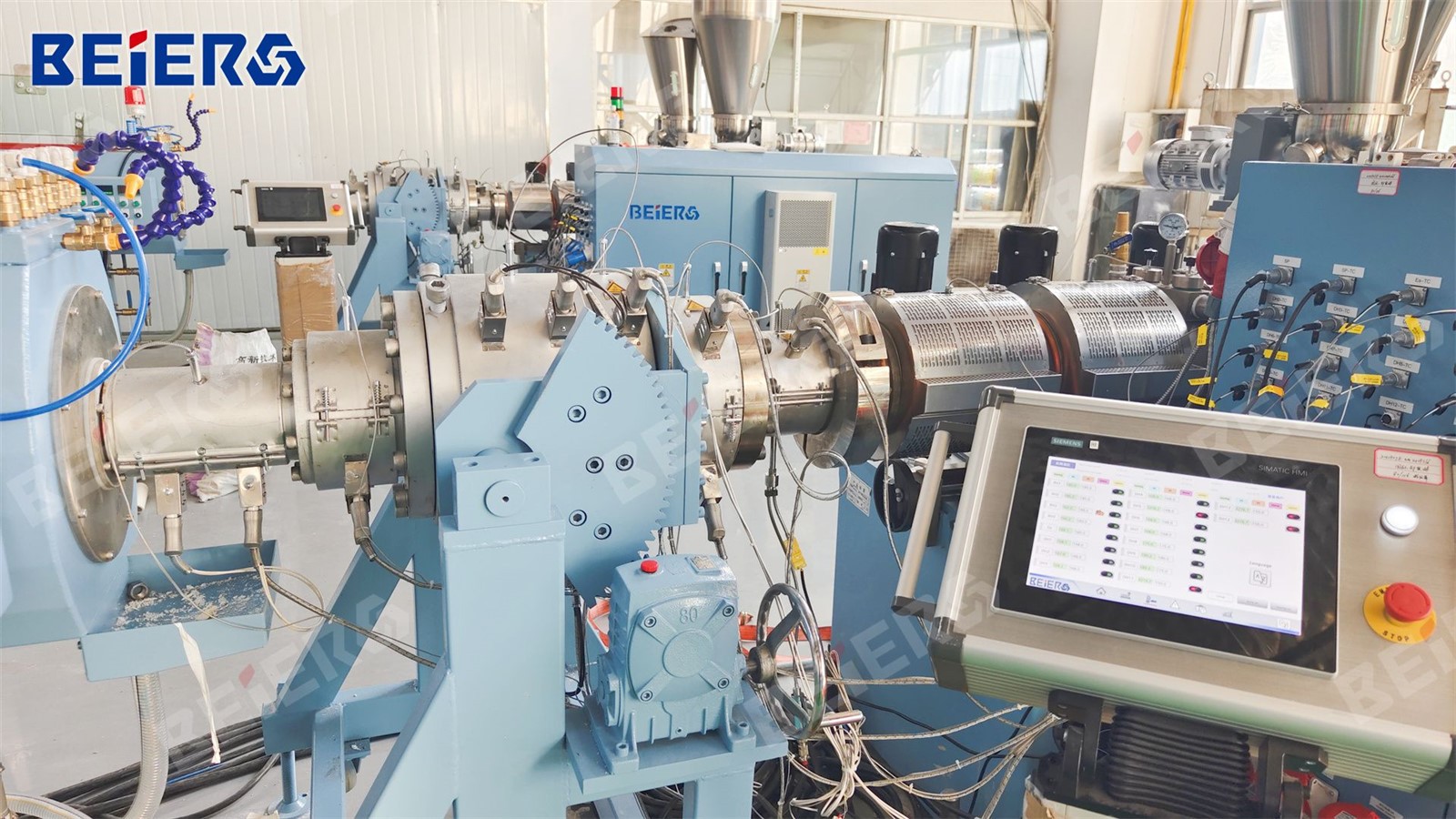
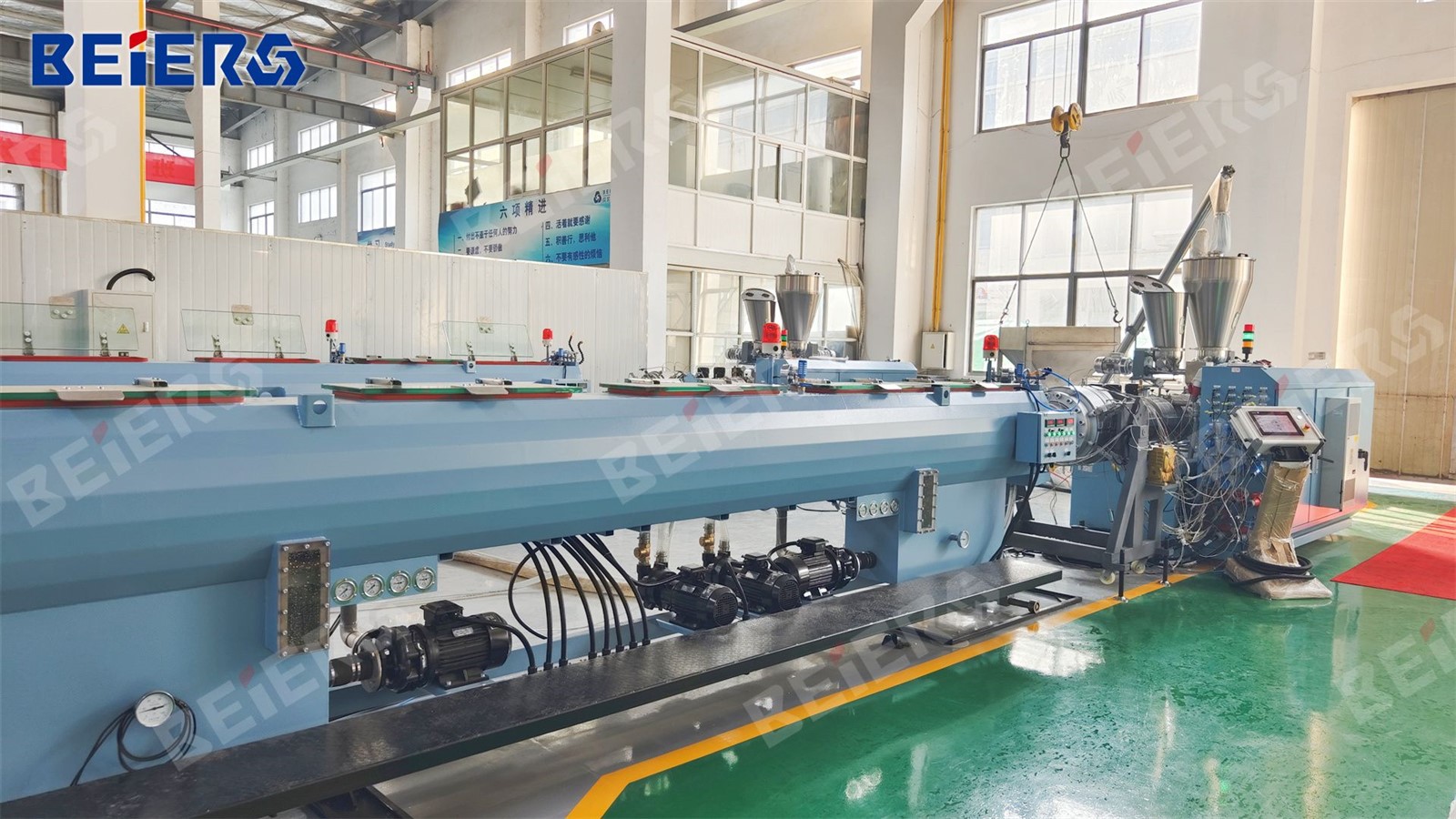
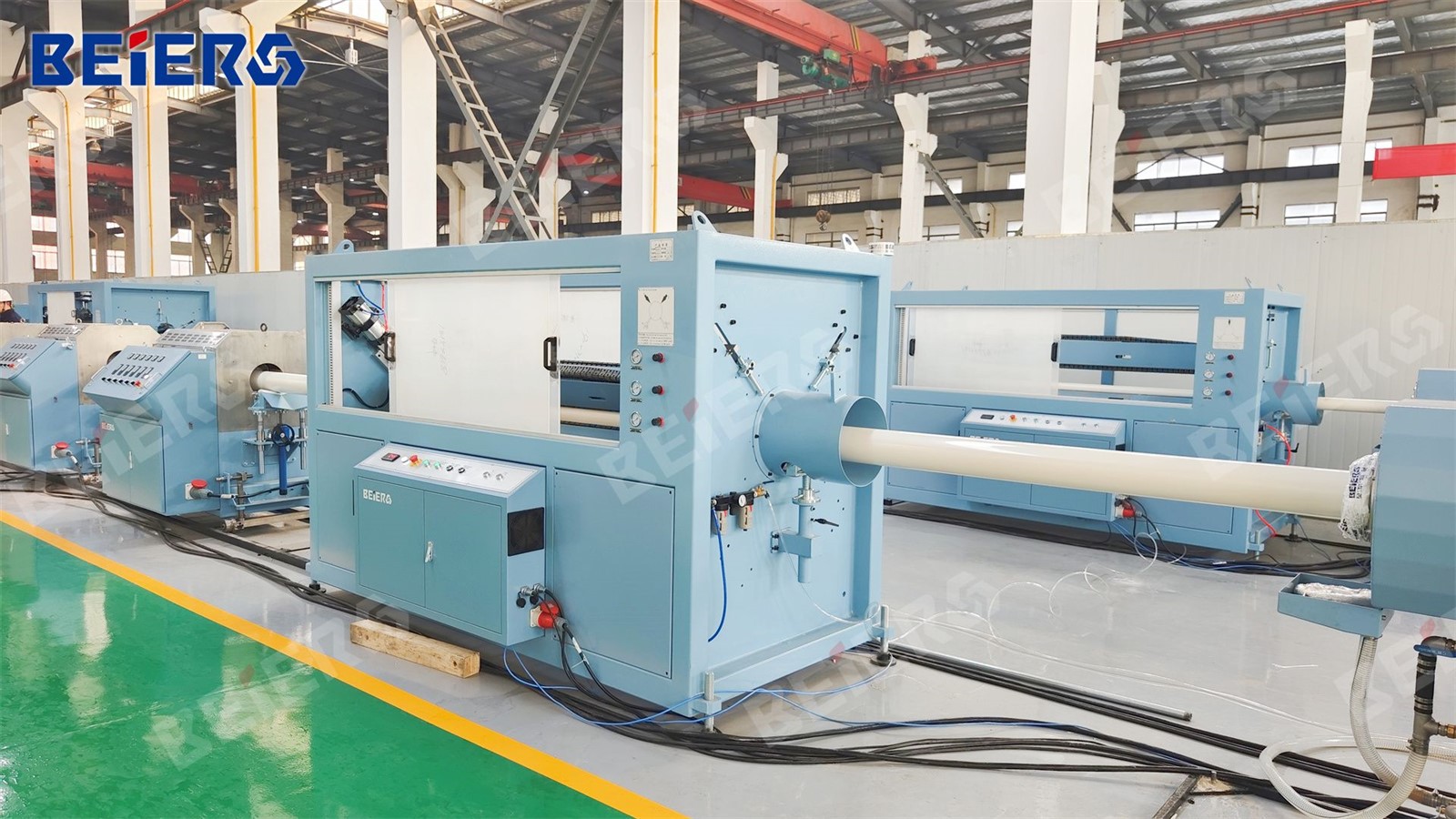
PVC-HO pipes are high-performance plastic pipes manufactured using a specialized process. These pipes offer superior mechanical strength and resistance to corrosion, making them ideal for a variety of applications in municipal, agricultural, industrial, and other sectors. The PVC-HO pipe extrusion line integrates cutting-edge equipment and advanced processing technology, ensuring efficient, high-quality continuous production.


BEIER Ф1000MM PVC-HO Pipe Extrusion Line


Features of the PVC-HO Pipe Extrusion Line
Corrosion Resistance: Ideal for transporting acidic and alkaline substances or for underground installations, with a service life of over 50 years.
Automated Control: The extrusion line uses PLC or industrial computer centralized control, allowing for precise adjustments to parameters like temperature, speed, and pressure.

Energy-Saving Design: Featuring an efficient screw structure and a heat recovery system, the extrusion machine reduces energy consumption by 20%-30%.
Modular Design: The production line is adaptable to produce pipes of various diameters (DN20-DN1200) and pressure ratings by simply changing molds and adjusting processes.
Stable Process: Technologies such as vacuum sizing and multi-stage cooling ensure the dimensional accuracy of pipes, with an error margin of ≤0.1%.



Hot Tags: pvc-ho pipe extrusion line, China pvc-ho pipe extrusion line, Plastic Film Pelletizer Machine, O pvc Extrusion Machine, plastic pipe extrusion line, pvc mixer, PET Recycling Machine, BR DL Series Cooling Mixer Machine
What's PVC-HO Pipes


PVC-HO pipes, also known as biaxially oriented PVC pipes, are a new generation of high-pressure pipes created by orienting PVC-U pipes in both the circumferential and axial directions. This biaxial orientation significantly improves the physical and mechanical properties of PVC. PVC-HO pipes represent the most advanced solution for transporting high-pressure water available on the market today.
PVC- HO Pipes Material Classification
The standard specifies the material classification, overall design coefficient, and nominal pressure for PVC-HO pipes. Unlike other materials, PVC-HO pipes are categorized into five classes-315, 355, 400, 450, and 500-based on their Minimum Required Strength (MRS). For drainage applications, materials rated below 400 are recommended, while for water supply systems, materials rated at 450 or 500 are preferred.
Higher-class PVC-HO pipes offer increased material strength and higher nominal pressure ratings. For the same diameter (DN) and pressure rating (PN), selecting a higher-class pipe results in greater hydraulic capacity, reduced head loss, and lower overall costs.
Following the standard requirements and utilizing a comprehensive evaluation method, BEIER PVC-HO pipes meet the 500 class certification.

|
Pipe material |
315 |
355 |
400 |
450 |
500 |
|||||||
|
MRS MPa |
31.5 |
35.5 |
40 |
45 |
50 |
|||||||
|
C |
1.6 |
2 |
1.6 |
2 |
1.6 |
2 |
1.4 |
1.6 |
2 |
1.4 |
1.6 |
2 |
|
σs MPa |
20 |
16 |
22 |
18 |
25 |
20 |
32 |
28 |
23 |
36 |
32 |
25 |
|
NO. |
Test temperature (℃) |
Test time (h) |
Hydrostatic stress (MPa) |
||||
|
PVC-HO 315 |
PVC-HO 355 |
PVC-HO 400 |
PVC-HO 450 |
PVC-HO 500 |
|||
|
1 |
20 |
10 |
41 |
46 |
52 |
60 |
65 |
|
2 |
20 |
1000 |
36 |
42 |
46 |
53 |
58 |
|
3 |
60 |
1000 |
20 |
22 |
25 |
28 |
31 |
Material Mechanical Properties
The table below provides a comparison of the technical characteristics of PVC-HO pipes with other types of plastic pipes.
|
PVC-HO500 |
PVC-U |
HDPE 100 |
||
|
Product Standard |
units |
CJ/T445-2014 |
GB/T10002.1-2023 |
GB/T13663.2-2018 |
|
Minimum required |
MPa |
50 |
25 |
10 |
|
Overal service |
1.4/1.6 |
2.0 |
1.25 |
|
|
Design stress (σs) |
MPa |
36/32 |
12.5 |
8 |
|
Short term elasticity modulus(E) |
MPa |
≥4000 |
≥3000 |
≥1000 |
|
Axial tensile strength |
MPa |
≥48 |
≥48 |
19 |
|
Circumferential tensile strength |
MPa |
≥85 |
≥48 |
19 |
The Advantage
Unbeatable impact resistance
BEIER PVC-HO pipes offer exceptional impact resistance, particularly in cold environments. Their impact resistance remains largely unaffected even at temperatures as low as -25℃, which expands their service area and extends the installation period.

|
Nominal diameter (mm) |
PVC-HO |
PVC-U |
||
|
Total mass(kg) |
Height(m) |
Total mass(kg) |
Height(m) |
|
|
90 |
5 |
2 |
0.8 |
1.2 |
|
110 |
6.3 |
2 |
1.0 |
1.6 |
|
125 |
6.3 |
2 |
1.25 |
2 |
|
140 |
8 |
2 |
1.6 |
1.8 |
|
160 |
8 |
2 |
1.6 |
2 |
|
180 |
10 |
2 |
2.0 |
1.8 |
|
200 |
10 |
2 |
2.0 |
2 |
|
225 |
12.5 |
2 |
2.5 |
1.8 |
Crack Propagation
Due to their networked and layered structure, PVC-HO pipes effectively prevent the spread of cracks and scratches, eliminating the risk of rapid crack propagation.

Fatigue resistance
Materials can lose their mechanical properties when subjected to prolonged strain, a phenomenon known as creep. PVC-HO pipes exhibit extremely low creep behavior. Compared to conventional plastics, PVC-HO pipes are highly resistant to fatigue, ensuring the durability of the pipes and allowing them to function at nominal pressure for over a century.

Maximum flexibility
Due to their exceptional elasticity, BEIER PVC-HO pipes can withstand significant deformations in their internal diameter. In the event of crushing or mechanical impact, BEIER Blue pipes quickly return to their original shape, reducing the risk of damage caused by soil subsidence or contact with sharp rocks or machinery.

Low carbon and environmental protection
BEIER PVC-HO Pipes are produced using high-quality raw materials and formulations to prevent the use of substandard materials. Their fully corrosion-resistant nature ensures that the quality of water flowing through the pipes remains unchanged.
Tests conducted by the National Institute of Environmental Health at the Chinese Center for Disease Control and Prevention, as well as the Hebei Health Inspection Institution, confirm that BEIER PVC-HO Pipes meet the hygiene standards outlined in the "Standard for Safety Evaluation of Equipment and Protective Materials in Drinking Water Systems."
In addition to their durability, BEIER PVC-HO Pipes offer environmental benefits by reducing the need for raw materials, lowering energy consumption, and decreasing CO² emissions. As a 100% recyclable material, PVC contributes to making BEIER PVC-HO Pipes one of the most eco-friendly and energy-efficient pipe solutions available.

Applications
PVC-HO pipes are primarily used for the transportation of potable water, irrigation, water conservancy projects, landscaping, drinking water supply in rural areas, fire protection systems, factories and mines, chemical corrosion prevention, sewage systems, reclaimed water, and more-specifically for conveying high-pressure water.
PVC-HO drainage pipes find applications in:
- Municipal Engineering: Used for sewage discharge, drainage, reclaimed water, and flood discharge systems.
- Construction Engineering: Suitable for building sewage pipes, rainwater drainage systems, underground drainage pipes, and ventilation pipes.
- Chemical, Pharmaceutical, and Environmental Protection: Widely applied in industries such as chemicals, pharmaceuticals, and environmental protection for sewage systems.
- Agriculture and Landscaping: Utilized in farmland, gardens, tea plantations, and forest drainage and irrigation systems.
- Road Engineering: Used for infiltration and drainage systems in railway and highway projects.
- Mining: Serves as ventilation and drainage pipes in mining operations.


